
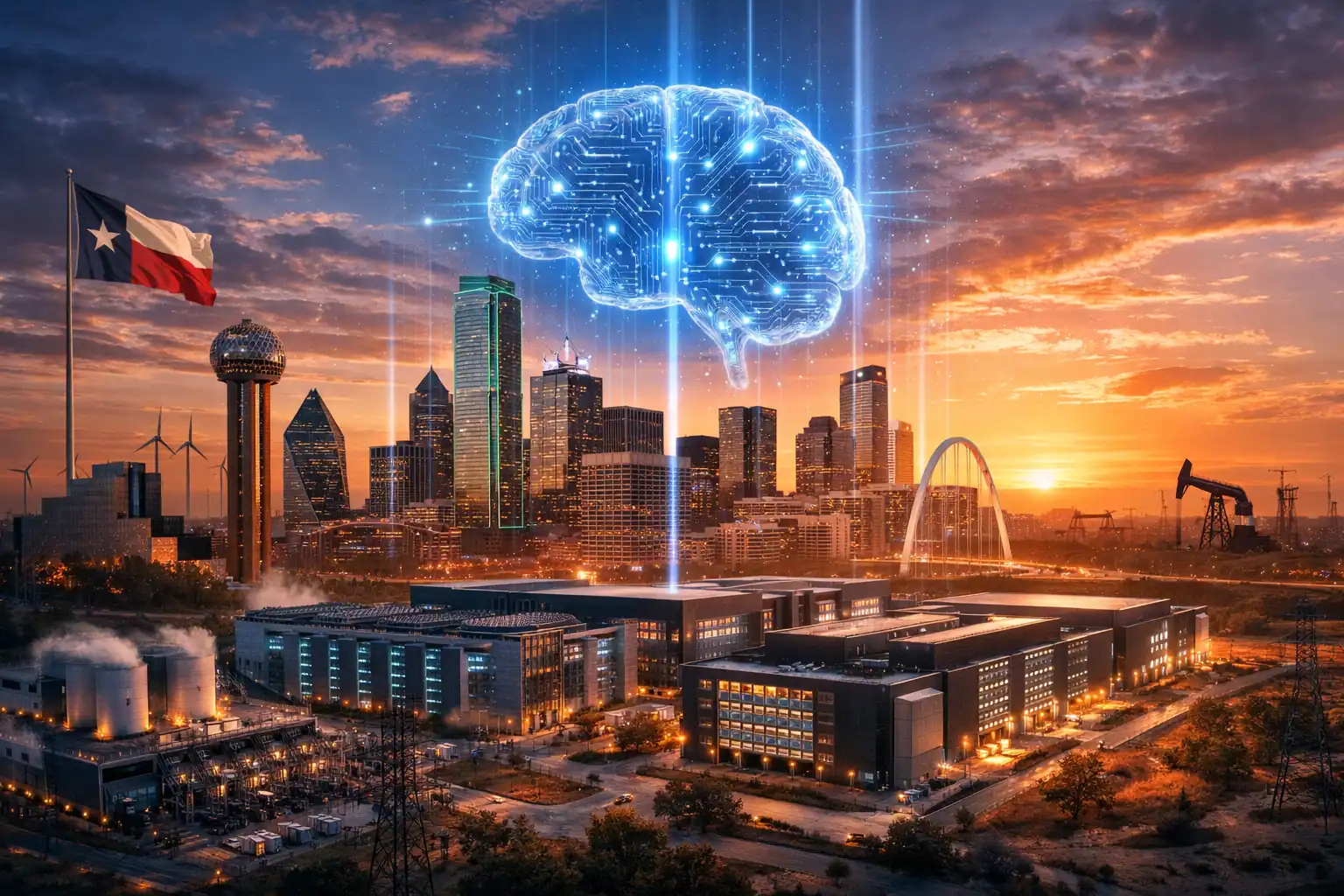
Why AI Data Centers Are Exploding in Texas — And What It Means for the Grid
May 17, 2026
📘 Introduction
Texas AI data centers are expanding at a historic pace in 2026, making the state the epicenter of America's AI infrastructure boom. Over the past three years, the state has seen a surge of new data centers—especially the high-density, high-power facilities needed to train and run artificial intelligence models. These aren't the traditional cloud server farms of the 2010s. AI data centers consume far more electricity, require more cooling, and place unprecedented strain on local infrastructure.
The result is a collision between the future of AI and the limits of the Texas power grid. As companies race to build bigger and more energy-hungry facilities, communities across the state are grappling with rising electricity demand, water usage concerns, and questions about who ultimately benefits from this rapid expansion.
Texas is attracting AI investment for clear reasons—but the consequences are becoming impossible to ignore.
🤖 Why Texas Is Attracting AI Data Centers
⚡ A Deregulated Energy Market
Texas operates its own grid through ERCOT, separate from the rest of the U.S. This allows faster interconnection approvals, more flexible energy contracts, historically lower wholesale electricity prices, and fewer regulatory hurdles. For companies that need massive, constant power, this is a major draw. Texas AI data centers are driving unprecedented demand on the ERCOT grid, forcing utilities to rethink capacity planning.
📍 Abundant Land and Lower Construction Costs
Texas offers cheaper land, fewer zoning restrictions, faster permitting, and large parcels suitable for multi-building campuses. Rural counties especially have embraced data center development as a source of tax revenue.
🌱 Access to Renewable Energy
Texas leads the nation in wind power and is rapidly expanding solar. AI companies can claim "green energy usage" while still relying on the grid's fossil-fuel backbone.
🏛 Tax Incentives and Local Deals
Cities and counties often offer property tax abatements, sales tax exemptions, and infrastructure support. These deals can reduce a data center's tax burden by tens of millions of dollars.
⚡ The Scale of Power Demand
🔥 AI Training Loads Are Massive
Training a single large AI model can require thousands of GPUs, continuous operation for weeks, and power usage measured in tens of megawatts. A single AI campus can draw as much power as:
- A small city
- Hundreds of thousands of homes
- Multiple industrial plants
📈 ERCOT's Projections Are Staggering
ERCOT has publicly stated that expected data center demand is growing faster than any other sector. Some projections show:
- Demand doubling by 2030
- AI data centers becoming one of the top electricity consumers in the state
- Local substations requiring major upgrades
This growth is happening faster than grid infrastructure can be built.
⚠ Strain on the Texas Grid
🌡 Peak Load Challenges
AI facilities run 24/7, meaning they add constant load even during peak demand periods. This reduces ERCOT's flexibility during heat waves, cold snaps, and high-demand evenings.
🏗 Local Substation Overload
Many rural or suburban substations were never designed for industrial-scale loads. AI data centers often require new transmission lines, new substations, and multi-million-dollar upgrades. These upgrades can take years.
🔌 Transmission Bottlenecks
Even if Texas has enough generation, getting that power to the right place is the challenge. AI clusters create local congestion, higher nodal prices, and increased curtailment of renewables. This leads directly to higher electricity costs for nearby communities.
💲 Impact on Electricity Prices
📊 Industrial Demand Drives Wholesale Prices Up
Large facilities consuming huge amounts of power push wholesale prices higher—especially during peak hours.
📍 Localized Price Spikes
Areas with heavy data center concentration often see higher congestion costs, higher transmission fees, and higher nodal pricing. These costs can be passed on to residential customers.
❓ Who Pays?
AI companies often negotiate long-term fixed-rate contracts. Residents and small businesses do not. This creates a perception—sometimes accurate—that communities are subsidizing corporate energy usage.
💧 Water Usage Concerns
Some facilities use 1–5 million gallons of water per day, more during peak heat, and more when using evaporator cooling. Central and West Texas regularly face water restrictions, aquifer depletion, and drought emergencies. Communities are increasingly questioning whether data centers should receive priority access to water.
🏛 Economic Benefits (and Who Actually Gets Them)
👥 Very Few Jobs
A billion-dollar data center may employ only 20–50 full-time workers, mostly high-skill roles with very little local hiring.
💸 Tax Incentives Reduce Local Revenue
Many counties offer 70–90% property tax abatements, multi-year exemptions, and infrastructure subsidies. This means the economic benefit is often smaller than advertised.
⚖ Winners and Losers
Winners: landowners, construction contractors, utility companies.
Losers: residents facing higher electricity prices, communities dealing with noise and water usage, and local governments with reduced tax revenue.
🏘 Community Reactions Across Texas
🌾 Rural Counties
Often supportive due to new tax revenue, infrastructure investment, and job creation during construction.
🏡 Suburban Areas
More resistance due to noise from cooling systems, loss of green space, traffic from construction, and water usage concerns.
🌍 Environmental Groups
Raising alarms about water consumption, fossil-fuel reliance, and land use impacts.
🏢 Economic Development Boards
Caught in the middle—balancing growth with community concerns.
🔭 The Future: Can Texas Handle the AI Surge?
⚙ Grid Upgrades Are Essential
ERCOT and utilities will need to invest heavily in new transmission lines, substation expansions, grid hardening, and energy storage.
🔋 Renewables Will Play a Bigger Role
Wind and solar growth will continue, but storage is the missing piece.
📜 Policy Changes Are Coming
Expect debates around water rights, tax incentives, local zoning, and energy pricing structures.
🚀 AI Isn't Slowing Down
The demand for compute is accelerating. Texas must decide how to balance economic opportunity with infrastructure limits.
🧾 Conclusion
Texas is becoming the epicenter of America's AI infrastructure boom. The state's deregulated energy market, abundant land, and renewable resources make it an attractive destination for companies building the next generation of AI data centers.
But this growth comes with real costs—higher electricity demand, water usage concerns, grid strain, and community pushback. The question isn't whether AI data centers will continue expanding in Texas. They will. The real question is whether the state can adapt fast enough to support them without compromising grid reliability, affordability, and quality of life.
The future of AI—and the future of Texas—are now deeply intertwined.
For more analysis on Texas energy and AI, visit PowerGrabTX.com.
AI data centers are reshaping Texas faster than most people realize. If you want to stay ahead of the changes affecting your community, energy costs, and local environment, join our update list.
Stay informed about AI's impact in Texas